Comforters are insulated bedding layers designed to provide warmth and help regulate comfort throughout the night. Their feel and temperature performance depend on factors such as fill material, construction, weight, and the surrounding bedroom climate. Comparing these characteristics can help clarify how a comforter fits into a broader bedding system with sheets, blankets, and pillows.
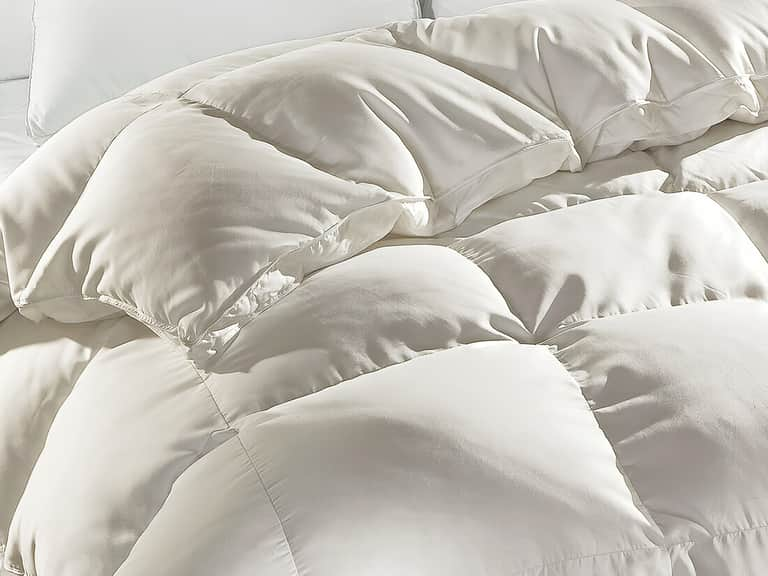
The Clean Bedroom Manhattan Goose Down Comforter uses goose down fill to create a lightweight layer with loft and insulating capacity. Down clusters trap air, helping retain warmth without the density of many heavier fills. The comforter’s construction and fill distribution influence how evenly it covers the bed and how its warmth feels during sleep.
When evaluating a goose down comforter, consider its warmth level, shell fabric, stitching, and care requirements. Baffle or sewn-through construction can affect whether fill stays evenly distributed, while a breathable shell may support airflow. These details matter for people seeking bedding that balances insulation, softness, and practical maintenance across changing seasons.
Comforters can be used alone or layered with a duvet cover, blanket, or lightweight quilt, depending on personal preference and room temperature. They complement other sleep products, including pillows and mattresses, but serve a different purpose: providing broad, insulated coverage. Material choices across bedding may include natural fibers, latex in mattresses, and options for organic sleep environments.
People selecting bedding for a child’s room may also compare comforter dimensions and weight with age-appropriate sleep guidance. Organic mattresses and organic crib mattresses address mattress materials and construction rather than comforter insulation, so these categories should be considered separately. Understanding each layer’s role helps create a coordinated, comfortable sleep setup.
 Bedding